
Embarking on a new development project is one of the most capital-intensive and complex endeavors a business can undertake. Whether you are developing a sprawling warehouse facility, a multi-story medical complex, or a boutique retail center, the stakes are universally high. A multi-million dollar budget and a brilliant architectural blueprint are essentially meaningless if the people executing the vision lack the expertise, coordination, and financial stability to see it through. Buildings are not merely constructed by machines and materials; they are built by carefully orchestrated teams of human beings.
In the development world, there is a pervasive and often financially devastating misconception that selecting the partner with the lowest initial bid is the most fiscally responsible decision. This approach routinely leads to disastrous outcomes. A low upfront bid often hides systemic deficiencies, such as a lack of specialized experience, reliance on substandard materials, or a tendency to issue relentless change orders once the project is underway. The true measure of a successful partnership relies on the concept of value over cost. Value encompasses reliability, adherence to strict schedules, proactive problem-solving, and the ability to anticipate roadblocks before they drain your contingency budget.
This guide will walk you through the lifecycle of a development project, from the moment you begin scouting raw land to the day you illuminate the exterior displays and open your doors to the public. Each phase of this journey requires a completely different set of specialized skills. By understanding how to rigorously vet and select the right professionals at every milestone, you can protect your capital, adhere to your timelines, and ultimately construct a facility that serves your business needs for decades to come.
Section 1: Navigating the Land Acquisition Phase
Assess Zoning and Future Expansion Potential Early
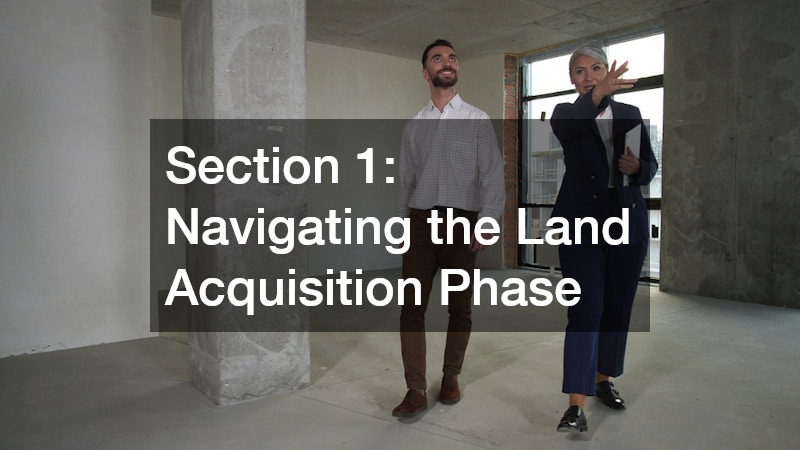
The foundation of a successful project begins long before the first shovel breaks the earth; it begins with the strategic acquisition of land. A common pitfall for developers is falling in love with a parcel based solely on its geographic location or immediate price tag, without conducting a deep dive into the logistical realities of the site. You must look far beyond your immediate blueprint. A parcel might be perfectly sized for your current needs, but what happens when your business operations scale in five years? Evaluating a site for future expansion potential, adequate parking ratios, and municipal zoning limitations is paramount.
To navigate this highly specialized market, you need a broker who understands the intricacies of industrial capacities, utility access, and environmental regulations. Engaging a professional who specializes in commercial and industrial real estate ensures that the property you are targeting actually aligns with your corporate strategy. They will help you investigate critical elements such as soil contamination history, local noise ordinances, and maximum allowable building heights, ensuring you don’t purchase a piece of land that is legally impossible to build upon.
When assessing a potential site, consider these vital factors:
-
Environmental Phase I and II Reports: Never skip environmental testing. Discovering an old, leaking underground storage tank after purchase can bankrupt a project before it starts.
-
Utility Infrastructure Capacity: Confirm that the local water, sewer, and electrical grids can handle the load your new facility will demand. If they cannot, the cost of bringing those utilities to the site will fall entirely on you.
-
Ingress and Egress: Evaluate how easily heavy trucks, employee vehicles, and emergency services can enter and exit the property from major thoroughfares.
-
Topography and Grading: A heavily sloped lot might offer a great view, but the cost of leveling the land and building retaining walls can destroy your site preparation budget.
Verify Title Clarity and Facilitate Secure Transactions
Once the perfect parcel has been identified and the price negotiated, the transaction enters a highly vulnerable phase. Transferring large sums of capital is inherently risky, and it should never be done without stringent, independent oversight. A seller may claim to own a property free and clear, but hidden liens, unrecorded easements, or boundary disputes can suddenly surface, halting your project indefinitely.
To protect your investment, it is critical to utilize an independent third party to manage the disbursement of funds and the transfer of the title. Utilizing a trusted commercial escrow service guarantees that your capital is held securely and is only released when all contractual obligations, environmental clearances, and municipal approvals are perfectly in order. This neutral party acts as the ultimate safeguard, ensuring that title searches are exhaustive and that you receive clean, undisputed ownership of the land.

Section 2: Vetting the Leaders Who Will Drive Your Project
Scrutinize Past Portfolios for Relevant Scale and Scope
Once the land is secured, your next critical task is selecting the entity that will oversee the daily execution of your vision. This partner acts as the central nervous system of your project, responsible for hiring subcontractors, managing supply chains, and keeping the schedule intact. However, a widespread error is assuming that construction experience is universally applicable across all project types.
When you begin the interview process, you must heavily scrutinize a candidate’s past portfolio for absolute relevance. A team that has successfully built dozens of single-story retail strip malls may be entirely out of their depth when tasked with constructing a multi-story biomanufacturing facility with clean rooms. You must partner with a commercial general contractor who possesses a proven, easily verifiable track record in the exact scale, scope, and industry niche of your planned build. Request to physically tour a recently completed facility that mirrors your own, and ask the previous owner about how the team handled adversity.
When reviewing past portfolios, specifically look for:
-
Similar Square Footage: The logistical demands of a 10,000-square-foot build are vastly different from a 100,000-square-foot build.
-
Industry-Specific Code Knowledge: Healthcare, food processing, and industrial manufacturing all have completely distinct municipal and federal building codes.
-
Financial Bonding Capacity: Ensure they have the financial backing and surety bonds required to cover a project of your financial magnitude.
-
Subcontractor Relationships: Ask about their network of local tradespeople. A well-connected leader will get priority scheduling from the best local plumbers, electricians, and framers.
Establish Clear Communication Protocols Before Signing
Even the most experienced teams will encounter unexpected challenges—weather delays, supply chain shortages, or unforeseen municipal inspections. How these challenges are communicated and resolved is what separates a mediocre partner from an exceptional one. Before any contracts are signed, strict communication protocols must be established and codified in writing.
You must define the reporting hierarchy, agree upon specific project management software (such as Procore or PlanGrid), and mandate a rigid meeting frequency. A professional commercial building contractor will not shy away from these requirements; rather, they will welcome the structure. They should willingly agree to provide transparent, standardized weekly reports that detail budgetary burn rates, schedule milestones achieved, and anticipated delays. If a partner is hesitant to commit to strict transparency, it is a massive red flag.
Section 3: Prioritizing Structural Integrity from the Ground Up
Demand Proof of Material Quality and Specialized Engineering
With the leadership team in place, the physical work begins with site preparation and foundational engineering. This is the most critical phase of the physical build because foundational errors are exceptionally difficult, and sometimes impossible, to correct later in the project timeline. The structural integrity of your entire multi-million dollar investment rests upon the quality of the dirt beneath it and the strength of the materials poured into it.
You cannot afford to cut corners on the foundation. You must demand rigorous geotechnical soil testing and strict adherence to structural engineering plans. It is vital to thoroughly vet the teams providing commercial concrete services for your project. These specialists must understand how to pour slabs that can withstand the specific point-loads of your industrial machinery or structural steel, resist the shifting of local soil types, and comply with all regional seismic or wind-shear safety codes. Ask for testing reports and cure-time schedules before the first cement truck ever arrives on site.
To ensure structural integrity, demand the following documentation:
-
Geotechnical Soil Reports: This dictates the type of foundation required (e.g., shallow spread footings vs. deep driven piles).
-
Mix Design Submittals: A detailed breakdown of the exact ratios of cement, aggregate, and water to be used, ensuring it meets the engineer’s required PSI (pounds per square inch) strength.
-
Slump Test Results: On-site testing of the wet mixture to ensure it has the correct consistency and workability before it is poured.
-
Cylinder Break Tests: Samples of the poured foundation that are cured and then crushed in a lab at 7, 14, and 28-day intervals to verify the final compressive strength.
Align Timelines Between Groundwork and Framing Teams
Construction is a sequential process, but it is rarely perfectly linear. One trade’s finish line is the next trade’s starting block. A major source of budget overruns is the inefficient hand-off between the teams doing the groundwork and the teams responsible for vertical framing. If the foundation is delayed by unexpected rain, but the steel erectors are already scheduled and mobilized, you will be hit with exorbitant “standby” fees while the framing crew sits idle waiting for the slab to cure.
To prevent this, you must create strategic buffers within your master schedule. Excellent coordination is required from your overarching commercial construction company to manage these transitional phases. A skilled partner will constantly monitor weather patterns, material delivery schedules, and curing times, adjusting the arrival dates of the framing, roofing, and enclosing trades dynamically. A seamless transition prevents logistical bottlenecks and keeps the project moving forward without unnecessary financial bleed.
Section 4: Integrating Complex Systems Seamlessly
Calculate Long-Term Energy Efficiency over Upfront Costs
Once the building is “dried in”—meaning the roof, walls, and windows are installed—the focus shifts to the complex internal systems that make the building habitable and functional. Chief among these is the climate control system. This is an area where developers frequently make the mistake of sorting bids by the lowest initial installation price, completely ignoring the long-term operational costs.
You must audit proposed climate control systems based on a 10-year or 20-year energy consumption projection. Partnering with a highly technical commercial hvac contractor is essential here. The right partner will not simply install an oversized unit to guarantee cooling; they will run complex load calculations, design efficient ductwork, and specify the exact tonnage required to maintain air quality and temperature. An expertly designed system will keep your future tenants comfortable, drastically reduce monthly utility overhead, and ensure compliance with increasingly strict environmental and green-building regulations.
When evaluating mechanical systems, consider:
-
Life-Cycle Cost Analysis (LCCA): Compare the initial purchase price against the expected maintenance costs, energy consumption, and eventual replacement cost.
-
Building Automation Systems (BAS): Invest in smart technology that allows facility managers to monitor and control lighting, climate, and security remotely.
-
Zoning Capabilities: Ensure the system can heat or cool specific areas of the building independently, rather than conditioning empty spaces unnecessarily.
-
Indoor Air Quality (IAQ): In a post-pandemic world, robust ventilation and advanced filtration systems are highly demanded by premium tenants.
Coordinate Overlapping Schedules to Prevent Trade Clashes
The interior build-out is a chaotic ballet of overlapping trades. Electricians are pulling miles of wire, plumbers are routing pipes through tight chases, and drywallers are attempting to close up the walls. Without meticulous spatial and temporal coordination, these trades will inevitably clash. A plumber might run a drain line directly through the space an electrician had reserved for a main conduit, resulting in tear-outs, rework, and bitter disputes between subcontractors.
To prevent this chaos, require all Mechanical, Electrical, and Plumbing (MEP) leads to participate in strict spatial coordination meetings before any interior walls are closed. It is highly beneficial to utilize a specialized commercial construction service dedicated specifically to interior finish-outs and clash detection. By utilizing 3D modeling and Building Information Modeling (BIM) software, these experts can identify physical overlaps in the digital blueprint long before the physical materials are ever installed, saving massive amounts of time and capital.
Section 5: Mitigating Financial and Physical Risks
Audit Coverage Limits for High-Value Materials
Construction sites are inherently dangerous and highly vulnerable environments. From the moment ground is broken until the final certificate of occupancy is issued, your project is exposed to a myriad of risks: catastrophic weather events, job site vandalism, fire, and the theft of highly valuable materials like copper wiring or specialized machinery. Managing this risk is not a secondary concern; it is a primary fiduciary duty.
You must continuously audit your risk management portfolio at distinct phases of the project. The coverage you need when the site is just an empty dirt lot is vastly different from the coverage required when millions of dollars of raw materials are sitting on the property. Securing comprehensive commercial property insurance that includes robust “builder’s risk” provisions is non-negotiable. This specialized coverage protects your financial interest in the structure and the uninstalled materials on site during the active build. Once the project is completed and handed over, this must be seamlessly transitioned into standard property and operational liability coverage.
Key insurance milestones to monitor:
-
Pre-Construction: Verify coverage for the raw land, including liability for trespassers or environmental runoff.
-
Mid-Construction: Ensure Builder’s Risk limits are high enough to cover the total replacement cost of the structure if a total loss (like a major fire) occurs halfway through the build.
-
Material Staging: Confirm that materials stored off-site in warehouses, or in transit to the site, are also fully covered.
-
Post-Occupancy: Transition to permanent property insurance and ensure your new tenants provide proof of their own liability coverage.
Require Certificates of Liability from Every Vendor
Risk mitigation extends far beyond protecting the physical building; it also involves protecting the project owners from devastating lawsuits. Construction is a hazardous occupation, and workplace injuries or property damage caused by a negligent subcontractor can easily result in litigation directed at the developer or the property owner.
To shield yourself, you must establish a zero-tolerance administrative rule: absolutely no worker, from the master electrician down to the temporary cleanup crew, is permitted to step onto the job site without an up-to-date, verified Certificate of Insurance (COI) on file. You must verify their general liability limits, workers’ compensation coverage, and auto liability. Furthermore, ensure your legal counsel drafts strict indemnification clauses in all vendor contracts, legally obligating the subcontractors to absorb the liability for any accidents or damages resulting directly from their work.
Section 6: Finalizing Exterior Elements to Drive Foot Traffic
Review Local Ordinances for Exterior Displays
As the interior nears completion, focus must shift to the exterior elements that will ultimately give your building its identity, drive brand awareness, and attract foot traffic. A beautiful building is useless if potential customers or clients cannot find it. However, the exterior branding of a facility is heavily regulated by local municipalities, and assuming you can erect whatever display you wish is a costly mistake.
Months before the building is finished, you should submit preliminary exterior design sketches to the local city planners for pre-approval. Partnering with professionals who specialize in designing, fabricating, and permitting commercial signs will save you from bureaucratic nightmares. A seasoned partner knows how to navigate the red tape of local zoning boards. They will understand the strict municipal restrictions regarding maximum height limits, square footage allowances, setback distances from the roadway, and strict luminosity (brightness) regulations to prevent light pollution in surrounding neighborhoods.
Coordinate Electrical Needs Prior to Hardscaping
The sequencing of exterior finishing work is just as critical as the interior MEP coordination. A tragic and entirely avoidable mistake is finalizing the exterior paving and landscaping, only to realize that power hasn’t been routed to the locations where the illuminated branding or security lighting will be installed. Tearing up newly poured concrete sidewalks or trenching through freshly planted, expensive landscaping to run electrical conduit is a massive waste of resources.
To avoid this, you must carefully coordinate the exterior electrical requirements long before the hardscaping begins. Trenching and running all necessary exterior conduit for landscape lighting, security cameras, parking lot lamps, and monument displays must be completed while the site is still rough dirt. Doing this foundational electrical work early ensures a pristine, undisturbed final aesthetic when the trees are finally planted and the concrete is cured.
Key steps for exterior coordination:
-
Master Power Plan: Map out every single exterior element that requires electricity, no matter how small.
-
Underground Trenching: Run all PVC conduit at the correct depths (dictated by local code) before any surface materials are applied.
-
Stub-Outs: Leave capped electrical lines (“stub-outs”) in strategic locations near the road or building entrances to easily connect future displays.
-
Landscaping Integration: Work with the landscape architect to ensure tree root systems will not eventually crush the underground electrical conduits over time.
Conclusion: Building a Cohesive Ecosystem
A structurally sound, highly efficient, and profitable facility is never the result of a single brilliant architect or a wealthy developer alone. It is the culmination of a highly complex ecosystem where dozens of specialized disciplines must work together in precise harmony. From the brokers who identify the initial plot of dirt to the tradespeople who wire the final lighting fixtures, every individual touches the project in a way that impacts the final outcome.
The core philosophy of successful development is “trust, but verify.” By committing to heavy, rigorous due diligence upfront—scrutinizing portfolios, demanding structural testing, auditing insurance policies, and prioritizing long-term value over short-term savings—you create a protective buffer around your investment. This proactive approach prevents the catastrophic errors that routinely cost developers millions of dollars on the back end of poorly managed builds.
Do not wait until you have a finalized blueprint to start assembling your team. Begin building your network of proven, reliable partners six to twelve months before you intend to break ground. By meticulously choosing the right experts for every distinct phase of the journey, you ensure that your ambitious commercial vision becomes a profitable, enduring reality.