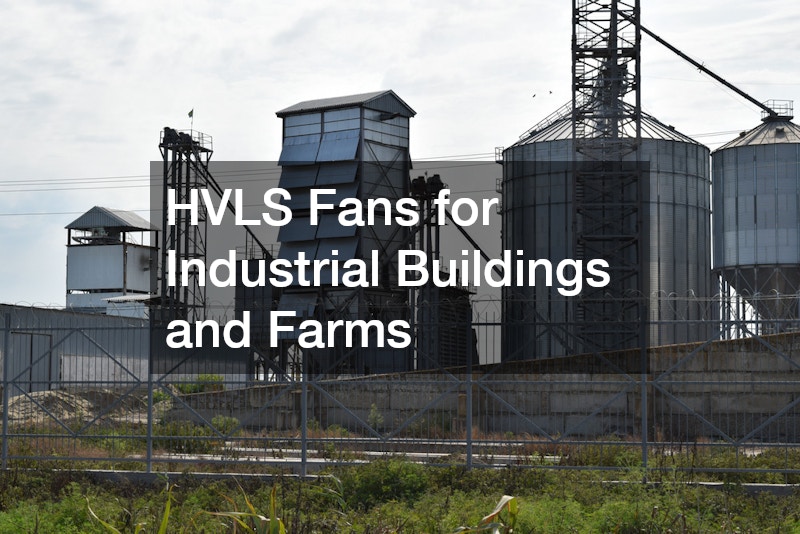

Warehouse HVLS (High Volume, Low Speed) fans are innovative and efficient solutions designed for various industrial and agricultural settings. These fans have revolutionized the way air circulation and climate control are managed in large spaces. Known for their impressive size and operational efficiency, HVLS fans can significantly enhance comfort, improve productivity, and reduce energy consumption in both warehouses and farm facilities.
In industrial environments where precision in climate control is paramount, HVLS fans ensure that airflow is optimized, leading to more stable temperatures and improved working conditions. For agricultural applications, these fans help regulate indoor environments, crucial for animal welfare and crop storage.
Their ability to move large volumes of air gently yet effectively makes them indispensable for maintaining optimal conditions in extensive areas.
Understanding the design and operational benefits of HVLS fans is essential for facility managers looking to upgrade their climate control systems. The subsequent sections of this article delve into the myriad benefits HVLS fans offer to warehouses and farms, providing detailed insights into their energy efficiency, air quality improvements, and supplemental temperature regulation capabilities.
What Are the Benefits of Using HVLS Fans in Warehouses and Farms?
Energy Efficiency
One of the most significant advantages of HVLS fans is their energy efficiency. Designed to circulate large volumes of air at low speeds, these fans can reduce the need for traditional HVAC systems, leading to considerable energy savings. In industrial settings, where energy consumption is a critical concern, implementing HVLS fans can result in noticeable reductions in both energy usage and costs.
By providing even air distribution, HVLS fans minimize the workload on heating and cooling systems. During the warmer months, they can help lower temperatures by facilitating evaporative cooling, while in colder months, they help destratify warm air trapped near the ceiling, pushing it down to floor level where it is needed. This process ensures a more consistent temperature without requiring excessive energy input.
Farm operations also benefit from the energy-efficient nature of HVLS fans. In livestock barns and other farming facilities, maintaining energy costs while ensuring proper ventilation is crucial. HVLS fans contribute to a healthier environment through improved air circulation at a fraction of the energy cost of traditional ventilation methods.
Climate Control and Temperature Regulation
HVLS fans are instrumental in precise climate control, critical for both industrial and agricultural settings. Their ability to move large volumes of air evenly across large spaces aids in maintaining consistent temperatures. This feature is especially valuable in warehouse operations, where temperature fluctuations can affect both worker productivity and product integrity.
In agricultural settings, climate control is essential for protecting crops and ensuring animal health. HVLS fans help maintain ideal temperatures in barns, greenhouses, and storage facilities, preventing heat stress in animals and spoilage of perishable goods. The gentle, constant air movement helps to create a stable microclimate, essential for the different needs present in farm environments.
For facilities that experience seasonal temperature changes, warehouse HVLS fans provide an adaptable climate control solution. They offer an effective means of adjusting facility atmosphere according to the season, reducing the reliance on more energy-intensive climate systems and leading to significant operational efficiency.
Improved Air Quality and Ventilation
Beyond temperature regulation, HVLS fans are crucial for enhancing air quality within large facilities. By steadily circulating air, they help disperse contaminants, dust, odors, and moisture, creating a healthier working and living environment. In warehouses, this leads to a significant improvement in air quality, directly impacting the well-being and productivity of the workforce.
In farm settings, where odor and moisture can be particularly challenging, HVLS fans offer a practical solution for ventilation. They assist in reducing ammonia buildup in animal barns, improving the overall conditions for both livestock and workers. Proper ventilation is key to minimizing respiratory issues in animals, ensuring better growth and productivity.
Additionally, improved air quality and ventilation contribute to the preservation of stored goods, preventing mold growth and spoilage. The reduction in airborne particulates facilitated by HVLS fans plays a critical role in maintaining a clean and safe environment, further augmenting their importance in industrial and agricultural applications.
How to Choose the Right HVLS Fan for Your Industrial or Farm Facility?
Size and Space Requirements
Selecting the appropriate HVLS fan begins with evaluating the size and space requirements of the facility. The dimensions of a warehouse or farm building, along with the specific layout, will determine the size and number of fans needed to provide optimal air circulation. Proper assessment ensures that air movement is effective and energy consumption is kept in check.
An understanding of the facility’s operational requirements is also crucial. Different areas might demand different airflow patterns, necessitating an HVLS fan selection tailored to accommodate these needs. For extensive or irregularly shaped spaces, multiple smaller fans might be more effective than a single large unit, achieving uniform air distribution throughout the facility.
It’s important to consider the installation height and available clearance when selecting HVLS fans. Factors like ceiling height, structural obstructions, and existing infrastructure must all be accounted for. This will influence not only the fan’s size but also its placement for optimal operation.
Fan Placement and Installation
Once the appropriate size and type of HVLS fan have been determined, the next step is strategic placement and installation. Proper placement ensures that airflow patterns are optimized for maximum efficiency. In a warehouse, the fan should be centrally located to cover the largest possible area with even airflow distribution.
Installation should be conducted by professionals who understand both the mechanical and operational aspects of HVLS fans. This includes ensuring proper clearance, secure mounting, and optimized height for effective performance. Installing fans incorrectly can lead to inefficiencies, increased maintenance needs, and potential safety issues.
What Are the Installation and Maintenance Considerations for HVLS Fans?
Installation Procedures and Requirements
Proper installation of HVLS fans is critical to ensuring their effective operation and longevity. Installation procedures should follow the manufacturer’s guidelines and take into account the specific design and structure of the facility. This includes assessing the load-bearing capacity of the ceiling and ensuring that electrical systems can support the fan’s requirements.
Experienced technicians are best suited for installing HVLS fans, as they possess the necessary skills to handle complex setups. Consideration must be given to height, spacing, and alignment to achieve uniform airflow. During installation, safety precautions, such as securing fans with additional safety cables and ensuring clearances from other equipment, are essential.
Additionally, installation should be timed and planned to minimize disruptions in day-to-day operations. Coordinating installation during periods of planned downtime or scheduling around less busy periods can help facilities maintain productivity while integrating new fan systems.
Routine Maintenance Practices
Routine maintenance is necessary to keep HVLS fans running efficiently and to extend their lifespan. Regular checks should include inspecting blades for wear and tear, ensuring electrical connections are secure, and verifying that all moving parts are lubricated as per manufacturer recommendations.
Maintenance schedules can be aligned with other routine facility maintenance tasks to ensure consistency. It is also advantageous to develop a checklist of specific areas to monitor, such as bearing lubrication, bolt tightness, and motor performance. Performing these checks can prevent minor issues from evolving into significant problems.
Training staff on basic maintenance practices can also be beneficial. While professional technicians should handle more complex tasks, in-house personnel can conduct visual inspections and basic cleaning, allowing for early identification of potential issues and reducing the downtime of major maintenance operations.
Conclusion
HVLS fans have become a vital component in optimizing operational efficiency and environmental conditions within warehouses and farms. They provide energy-efficient climate control, improved air quality, and reduced maintenance requirements, making them a practical choice for facility managers.
Selecting the correct HVLS fan involves carefully considering factors such as size, material, placement, and durability, each of which plays a critical role in the fan’s success within a specific environment. Proper installation and a proactive maintenance approach ensure that these fans perform optimally over their lifecycle.
Integrating HVLS fans into industrial and farm settings provides a strategic advantage, offering cost savings, enhancing worker and animal welfare, and supporting sustainable operational practices. Their ability to improve air circulation and climate control makes them an essential investment for facilities looking to achieve better efficiency and productivity.